
Clear Creek County Arrest Records and Court Charges
Clear Creek County arrest records are not the same as the charges filed in court. The arrest side can involve the Sheriff's Office, an incident report, booking photo, custody status, bond, or jail intake information. The court charge side begins when the prosecutor files a complaint, information, indictment, or other charging document with the court. That charge record then follows the case through advisement, arraignment, plea, disposition, and sentencing.
The distinction matters because jail and court records can disagree at first. An arrest may list an alleged offense at booking, but the 5th Judicial District Attorney decides which charges to file in state criminal actions. Some charges may be added, amended, reduced, dropped, or dismissed as the case moves. For custody status and jail lookup channels, use the Clear Creek County inmate records page; for the full case file and final outcome, use the criminal court case record.
Find Clear Creek County Arrest Records
Start with the record type. For filed court charges, use the Colorado Judicial Branch docket search and select Clear Creek County or Clear Creek County Courthouse. For Sheriff-held arrest and incident records, use the Sheriff's criminal justice records request form. For custody status after an arrest, Clear Creek County points users to VINE and the Colorado VINE phone number.
- Check whether the person is in custody through Colorado VINE or by calling the VINE phone service.
- Search the court docket by defendant name, case number, or CR case class to find filed charges.
- Read the docket for arraignment, charge, plea, disposition, sentencing, bond, and review entries.
- Request incident reports, booking photos, address/name searches, photos, or body-worn camera video from the Sheriff when the record is law-enforcement material.
- Request certified court documents from the Clerk of Court when the needed item is a complaint, disposition, sentence, or order.
The county did not publish a local mugshot database or county-hosted jail roster in the inspected official sources. The official custody route is VINE, and the official county law-enforcement record route is the Sheriff request process.
Charges After Arrest in Clear Creek
Charges after arrest are filed through charging documents. The exact document depends on the case type and prosecutor process. A complaint may start a misdemeanor or early criminal case. An information is a formal prosecutor-filed charging document. An indictment is a formal grand-jury charge. Each document tells the court and defendant what offenses are alleged.
| Complaint | Information | Indictment | |
|---|---|---|---|
| Filed by | Officer or prosecutor, depending on case path. | Prosecutor. | Grand jury. |
| Common use | Misdemeanors, advisements, or initial filings. | Many felony prosecutions. | Serious or grand-jury matters. |
| Record role | Begins or supports the court case. | States formal filed charges. | States formal grand-jury charges. |
| Where to verify | Court docket and case file. | Court docket and case file. | Court docket and case file. |
Statewide Arrest and Custody Lookups
The Colorado Department of Corrections offender search is a state-prison locator for sentenced offenders, not a Clear Creek County jail booking database.
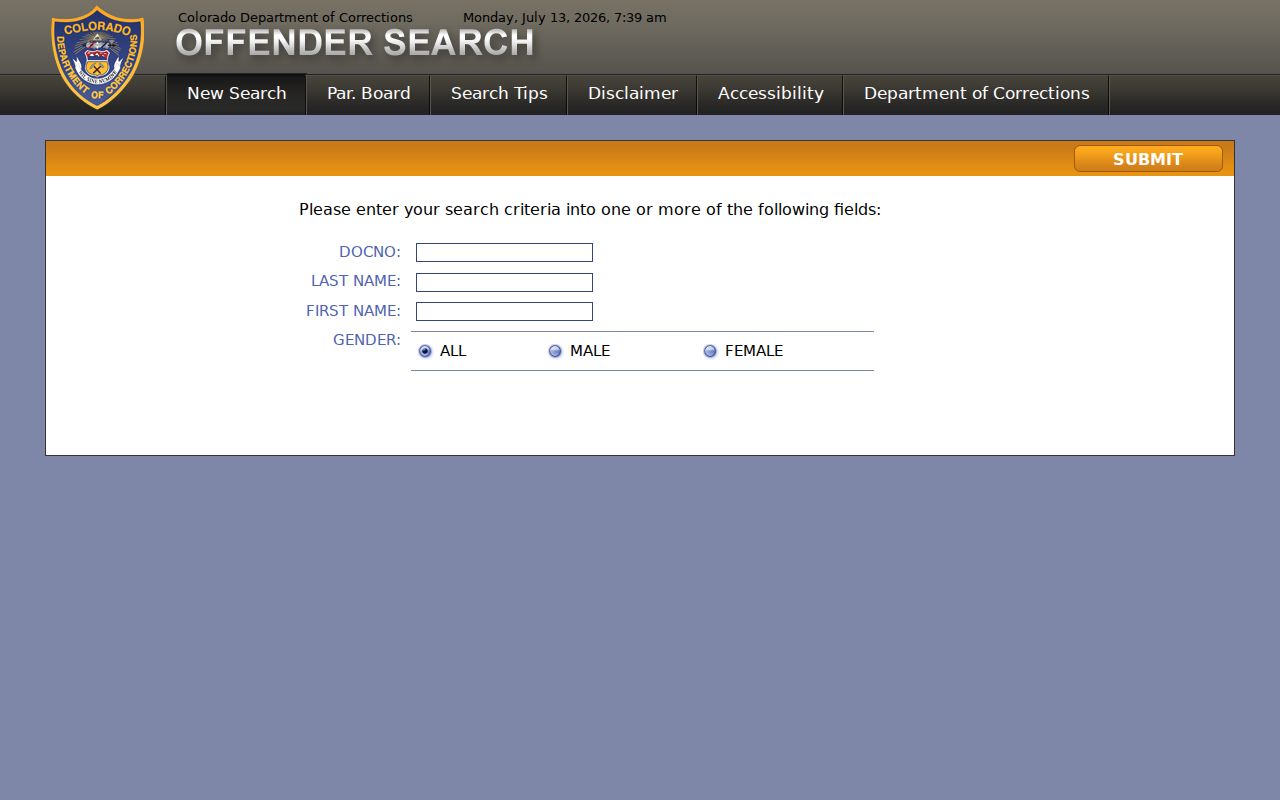
Use DOC only when the person may be in state prison after sentencing, not for a new county arrest or pretrial custody check.
The Colorado.gov locate an inmate service points users to the state inmate database for prison custody searches.
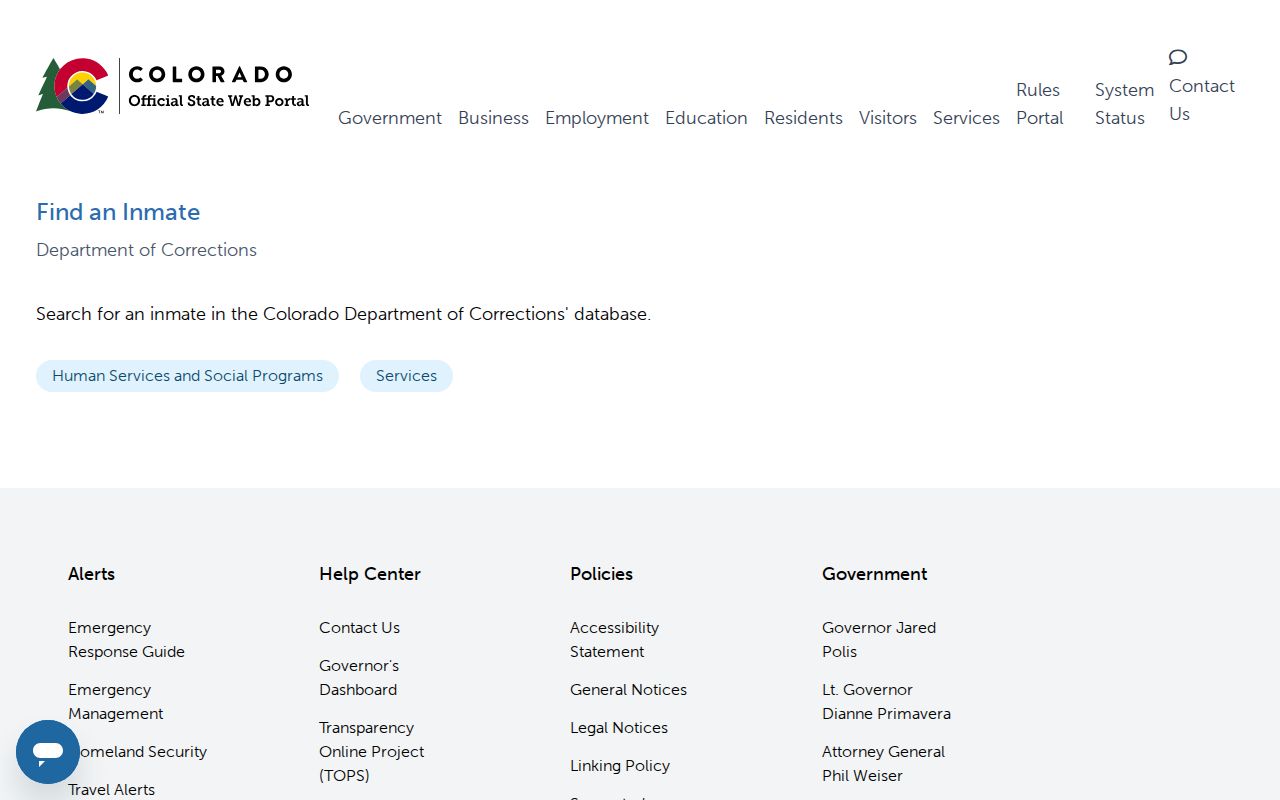
That state service is useful for sentenced custody status, while court charges after arrest remain in the court case.
For custody notifications, Clear Creek County routes users to VINE, which supports notification by phone or email for custody-status changes.
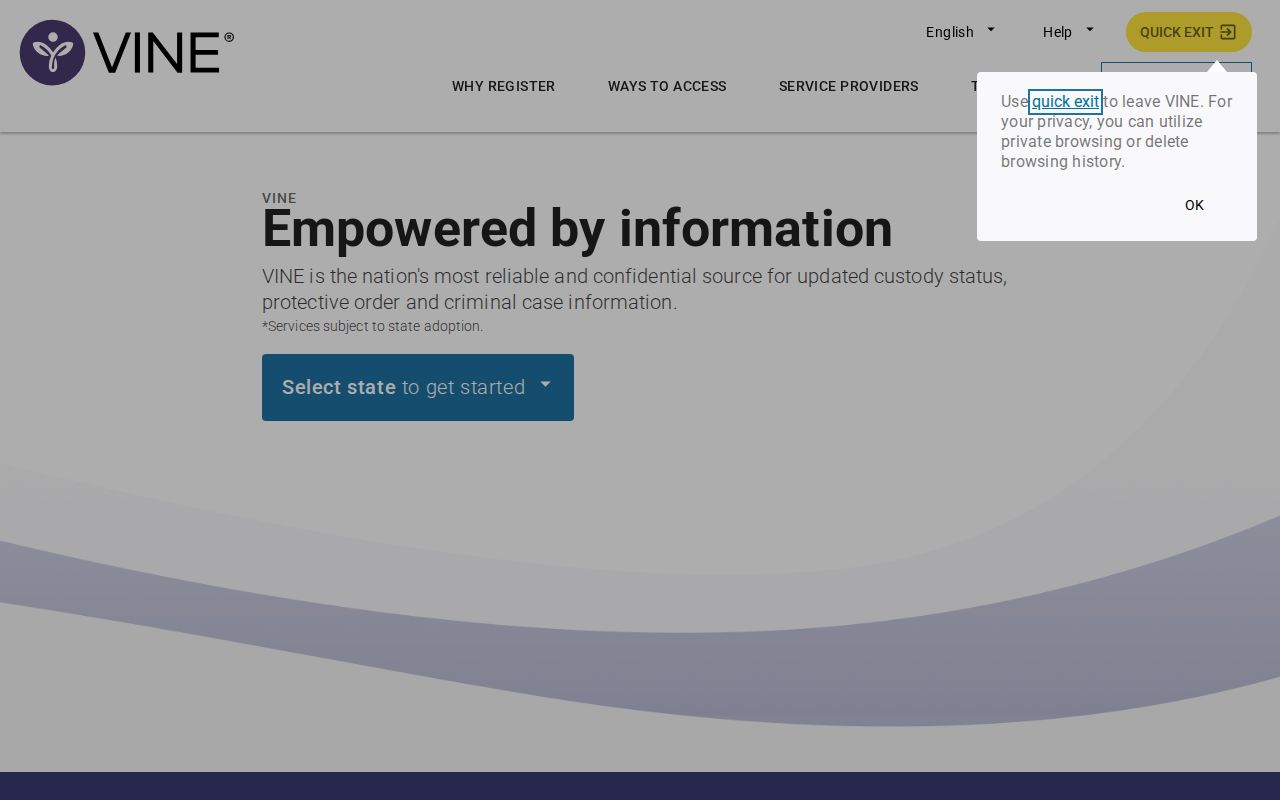
VINE helps answer whether someone is in custody, but it does not replace the court docket for filed charges and outcomes.
Clear Creek Court Charge Status
Charge status is the current posture of a filed accusation. A charge can remain pending, be amended, be reduced to a different level, be dismissed, or end in a conviction after plea or trial. A single arrest can also produce several counts, and each count can have its own status. The docket and case file should be read charge by charge.
| Status | What It Means |
|---|---|
| Pending | The charge is active and has not reached final disposition. |
| Amended | The filed accusation changed, often by charge language, statute, level, or count. |
| Reduced | The charge moved to a lesser offense level or different offense as part of the case path. |
| Dismissed | The charge was ended by court action or prosecutor decision. |
| Deferred | The case may require compliance before final dismissal or conviction consequences are determined. |
| Convicted | The defendant was found guilty or entered a guilty plea on that charge. |
Charges vs Convictions
An arrest record or filed charge should not be read as proof of conviction. It shows an accusation or custody event. The conviction question is answered by the disposition and sentence in the court record. This is why court charges after arrest should be checked against later case entries before drawing any conclusion.
| Charge | Conviction | |
|---|---|---|
| Meaning | An allegation filed in court. | A legal finding or plea that supports sentencing. |
| Timing | Appears near the start of the court case. | Appears after plea, trial, or final case resolution. |
| Can change | Yes. It may be amended, reduced, or dismissed. | It remains unless later vacated, sealed, or otherwise changed by lawful process. |
| Best record field | Charging document and charge status. | Disposition and sentence. |
Sheriff Arrest Records in Clear Creek
The Clear Creek County Sheriff's Office handles many criminal justice records outside the court file. Its online Criminal Justice Records Request Form includes checkboxes for offense or incident reports, booking photos, address/name searches, photos, body-worn camera video, Georgetown records, and other records. The form asks for the date of request, requester name, email, phone, agency if any, record type, report number, incident date, incident location, person involved, date of birth, and specific information.
The Sheriff records page says requesters are contacted with the cost and that prepayment is required. It also provides the Records Unit phone and email path in county materials. For new or active matters, some arrest details may be limited by safety, privacy, investigation, court order, or criminal justice records rules.
Clear Creek County Sheriff Records
405 Argentine Street
P.O. Box 2000
Georgetown, CO 80444
(303) 679-2376
Monday-Thursday, 7:30 a.m.-4:00 p.m.
Who Files Clear Creek Charges
The 5th Judicial District Attorney prosecutes state criminal actions in Clear Creek, Eagle, Lake, and Summit counties. County materials state that the DA prosecutes felony and misdemeanor charges and does not handle civil matters or divorce proceedings. That role is why the charge list in the court case may differ from the first arrest or booking description.
For a charge question, identify whether the matter is in County Court, District Court, or a municipal court. Idaho Springs municipal matters can involve the city police ecosystem. Georgetown currently contracts with the Clear Creek County Sheriff's Department for police services, and county news materials identify a late-2025 law-enforcement services agreement. The correct agency and court depend on where the alleged offense occurred and what charge was filed.
Charge Codes and Severity Levels
Colorado charges often point to a statute, level, or offense class. In Clear Creek County court records, a criminal charge may appear with a case class, offense text, count number, or court event that shows how it is being handled. One case can contain several charges, and one arrest can lead to charges at different levels.
- Felony
- A serious criminal charge that generally belongs in District Court after filing or bind-over.
- Misdemeanor
- A lower-level criminal charge often handled in County Court.
- Traffic misdemeanor
- A traffic-related criminal matter that is different from a simple traffic infraction.
- Infraction
- A non-criminal traffic or ordinance-style violation, depending on the issuing court and law.
Sealed vs Expunged Arrest Records
Colorado sealing law can restrict public access to eligible criminal records, including some non-conviction and conviction records. Sealing does not always erase the record for courts or law enforcement. Juvenile expungement is handled under separate Children's Code rules and can have stronger legal effect. Waiting periods, offense exclusions, notice requirements, and custodian updates vary by record type.
| Sealed | Expunged | |
|---|---|---|
| Public visibility | Generally removed from public inspection. | Legally treated as not existing for many purposes. |
| Who may still see it | Courts, law enforcement, or authorized agencies may retain access. | Access is narrower and depends on juvenile or specialized law. |
| Common process | File in the court where records are located when a court filing is required. | Use the applicable juvenile or specialized expungement process. |
| Clear Creek custodians | Court, DA, Sheriff, CBI, and related agencies may need orders. | Custodian notice and record updates still matter. |
Restricted Clear Creek Charge Records
Some arrest and charge records are restricted even when the main adult case is public. Juvenile records are handled under Colorado Children's Code access rules. Sealed records, expunged juvenile records, active investigation details, victim-sensitive information, protected addresses, medical details, mental health details, Social Security numbers, financial account numbers, and minor identities may be withheld or redacted.
The Colorado Criminal Justice Records Act gives custodians authority to make rules for inspection and deny access when the law, a court order, a court rule, or the public interest requires denial. Court records follow Judicial Branch policy and court orders. Sheriff records follow criminal justice records rules. That is why a person may see a public court event but not receive every agency report tied to the same arrest.
Important: Do not treat an arrest entry or filed charge as a final case outcome without checking disposition.